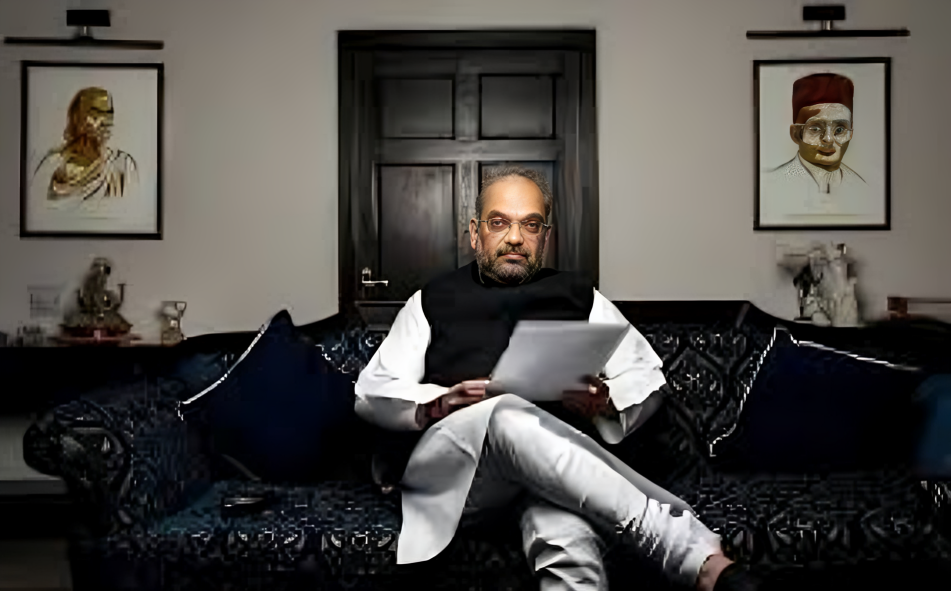
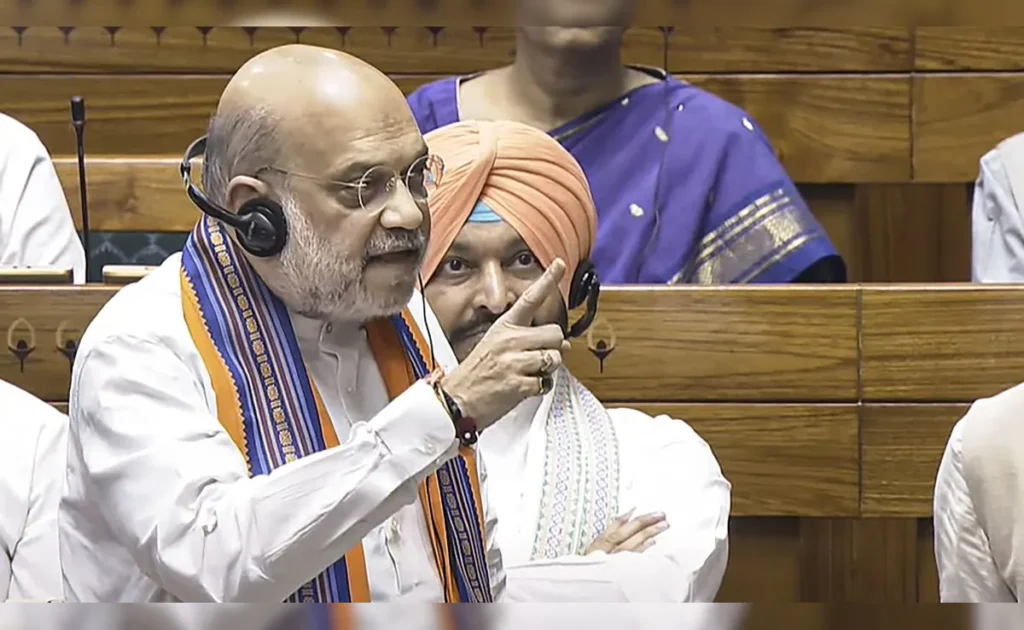
Home Minister Amit Shah presenting the Constitution (130th Amendment) Bill, 2025 in Lok Sabha.
On August 20, 2025, the Lok Sabha witnessed a pivotal moment in Indian legislative history. Union Home Minister Amit Shah introduced three crucial bills designed to reform the constitutional standards for elected officials, with a strong focus on boosting political accountability. This legislative move aims to address the persistent issue of political figures remaining in power despite facing criminal charges, a concern that has often surfaced in Indian public discourse. Let’s break down the details and the broader significance of these bills, supported by official government sources, legal analysis, and parliamentary records.
Major Bills Introduced by Amit Shah in Lok Sabha
The Constitution (130th Amendment) Bill, 2025: Defining Accountability for Top Office Holders
Amit Shah presented The Constitution (One Hundred and Thirtieth Amendment) Bill, 2025 in the Lok Sabha, a move that stirred intense debate across the House. The bill targets Articles 75, 164, and 239AA of India’s Constitution. Its bold provisions establish, for the first time, a constitutional framework for removing the Prime Minister, Chief Ministers, and other Ministers at central and state levels if they are:
Arrested and detained for a continuous period of 30 days.
Facing charges punishable by five years or more of imprisonment.
This proposed change means ministers cannot direct policy or run the government while detained on serious criminal allegations. Specific removal mechanisms are detailed as follows:
For the Prime Minister: Removal is to be executed by the President.
For Union Ministers: The Prime Minister initiates their removal.
For Chief Ministers: The Governor holds the authority.
For State Ministers: It’s the Chief Minister’s discretion.
For Union Territory Ministers: The Lieutenant Governor removes them.
A unique clause permits the reappointment of any individual after their release from custody. This balances the principles of constitutional morality with the presumption of innocence, preventing indefinite exclusion from office for those acquitted or released. For original government data and bill text, consult the Ministry of Parliamentary Affairs and Press Information Bureau official releases.
Jammu and Kashmir Reorganisation (Amendment) Bill, 2025: Applying Strict Standards in J&K
Amit Shah also introduced the Jammu and Kashmir Reorganisation (Amendment) Bill, 2025. Building upon the framework established by the J&K Reorganisation Act, 2019, this amendment specifically modifies Section 54. The new provisions ensure that the Chief Minister and Ministers of Jammu and Kashmir can be removed from office should they be detained for 30 consecutive days on serious criminal charges with a potential sentence of at least five years.
This applies a uniform standard of accountability to the Union Territory, promoting higher ethics and aligning J&K governance with that of the rest of India. The bill text is available on official legislative records and government portals.
Government of Union Territories (Amendment) Bill, 2025: Extending the Mechanism to Delhi, Puducherry, and Others
Mirroring the changes put forth for J&K, the Government of Union Territories (Amendment) Bill, 2025 brings similar provisions to Delhi, Puducherry, and other Union Territories. Under the amended law, any Chief Minister or Minister detained for 30+ days on severe criminal allegations will be subject to removal through the prescribed authority—primarily the Lieutenant Governor, acting upon the advice of the Chief Minister when applicable.
This closes gaps in existing laws that previously allowed ministers under investigation to continue discharging official duties, potentially impacting public faith in governance.
Legal and Comparative Context: India’s New Approach Versus Global Norms
Legal Basis in India
Until now, the Indian Constitution and related statutes such as the Representation of the People Act, 1951, only addressed disqualification in terms of Parliament and Assembly membership—not the automatic removal of office based on criminal detention. This new suite of legislative amendments specifically targets:
Article 75 (Union Council of Ministers),
Article 164 (State Council of Ministers), and
Article 239AA (Delhi governance).
Prior to these bills, Section 54 of the J&K Reorganisation Act and Section 45 of the Government of Union Territories Act did not mandate the removal of Ministers or CMs detained on serious allegations, leaving a major loophole. The new provisions directly tackle public concerns on corruption and misuse of executive office.
International Comparisons
The United Kingdom relies on political conventions rather than law—ministers usually resign under the shadow of criminal investigations, prompted by public and party pressure.
In the United States, formal impeachment processes (which require legislative votes) are needed to remove elected officials; there’s no automatic removal.
France and Germany permit temporary suspension or voluntary resignation but do not impose automatic ousters through statutes.
Thus, these Indian bills represent a progressive constitutional solution to enforce accountability, informed by comparative international experiences.
Reactions and Debate in Parliament: Political Storm Unfolds
The bills triggered a stormy debate in the Lok Sabha on August 20th. Opposition leaders, primarily from the INC-led alliance, accused the government of undermining the presumption of innocence and feared misuse of executive power. Heated exchanges ensued, and some opposition MPs staged protests, with paper bits thrown in the House and audible slogans interrupting proceedings.
Congress leader KC Venugopal raised questions about “constitutional morality,” referencing historic cases where ministers held office during ongoing cases. Amit Shah, in his rebuttal, referenced his own past legal woes, clarifying he resigned before his arrest and maintained a principled stance while awaiting judicial verdict. He emphasized the bills are meant to elevate ethical standards and bring the Prime Minister, Ministers, and CMs under strict legal scrutiny, reversing prior amendments (like during the Emergency) that elevated the PM above legal challenge.
The opposition alliance claimed the bills could be weaponized to politically target adversaries. However, the government insisted that the proposal would promote good governance and trust in public institutions. Shah confirmed the bills would be sent to a Joint Parliamentary Committee to assure all sides of robust debate and safeguard against overreach.
Public and Legal Expert Opinions
While the bills have been largely welcomed as steps toward transparent governance by some legal experts and watchdogs, others remain concerned about their practical implementation. There is ongoing debate about the risk of politically motivated arrests and the safeguards available to prevent misuse. The reappointment clause—allowing ministers to regain their posts after release—seems to provide some recourse, but worries about due process persist.
Amit Shah, in the House and via his official statements, argued that the bills are essential to restore public faith in the system, stating that if a leader is in jail for a serious crime, running the government from jail is unacceptable. This, he argued, brings India’s politics closer to global standards for ministerial ethics.
Summary of Parliamentary Debate and Reactions from Different Parties
The BJP and NDA partners lauded the bills, framing them as landmark reforms to cleanse Indian politics and prevent “Criminal Netas” from holding power while detained on major charges. Amit Shah and other government speakers characterized the reforms as an effort to bring the highest offices under the rule of law.
The Congress party, along with the INDIA opposition bloc, criticized the move as too sweeping. They argued that the mechanism could be used for vendetta politics, referencing historic misuses of executive power. They demanded additional safeguards and transparency in the implementation process. Some opposition members called for the bills to be reviewed by expert panels beyond the JPC.
Regional parties had mixed reactions. Leaders from states with high-profile cases of legal battles involving ministers both welcomed and questioned the timing and intent. Legal scholars stressed the need for clear definitions and procedural checks to prevent excessive executive control, supporting the JPC referral.
Step-by-Step Legislative Process in Indian Parliament
Amit Shah’s bills are subject to the rigorous legislative procedure of the Indian Parliament, which ensures thorough scrutiny and checks before any proposal becomes law:
Introduction: The bill is presented in either House; non-money bills may originate in the Lok Sabha or Rajya Sabha, but these constitutional bills were introduced in the Lok Sabha due to their significance.
First Reading: The bill’s contents are formally listed, without any debate.
Second Reading: Members debate the provisions at length. The bill is referred to a committee for detailed examination.
Committee Stage: A Joint Parliamentary Committee, comprising both ruling and opposition MPs from both Houses, scrutinizes the bills, recommends amendments, and addresses concerns from all sides.
Third Reading: Final debate and vote take place.
Other House: If passed, the bill moves to the Rajya Sabha for a similar process.
Joint Sitting: In the rare case of disagreement, the President may call a joint sitting (Article 108).
Presidential Assent: On approval, the bill becomes law.
For detailed official documentation and resources, refer to the Parliamentary Affairs Ministry, and Drishti Judiciary’s guide on legislative procedure.
Conclusion: A New Era of Political Integrity?
These bills mark a watershed moment for Indian democracy, laying a legal foundation for higher standards of accountability at the apex of government. If passed, they would undeniably reshape the ethical landscape of political office, ensuring the trust of Indian citizens in their elected representatives is well-placed.
Further Information and Official Sources
For additional reading and the original government bill texts, refer to:
Press Information Bureau’s official release
PRS Legislative Research’s bill trackers for The Constitution (130th Amendment) Bill, 2025 and The Jammu and Kashmir Reorganisation (Amendment) Bill, 2025
Ministry of Parliamentary Affairs bills list
These sources provide updated and authentic legislative information that is crucial for legal research and keeping abreast of new governance standards.
This shift, if enacted, will likely be debated for years to come as India strives for transparent, accountable governance in the world’s largest democracy.